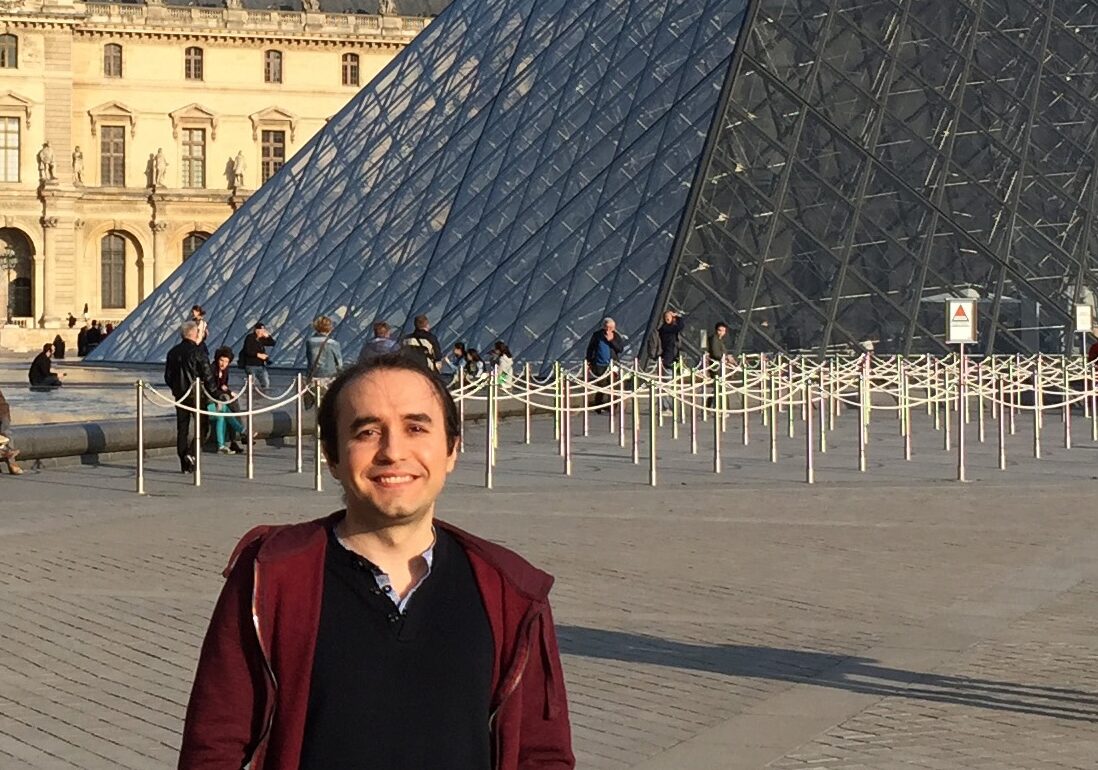
About You
My name is Selim and I’m the Turkish localization manager. I’m from İstanbul, Türkiye. I’ve been contributing to Mozilla since 2010.
Your Contributions
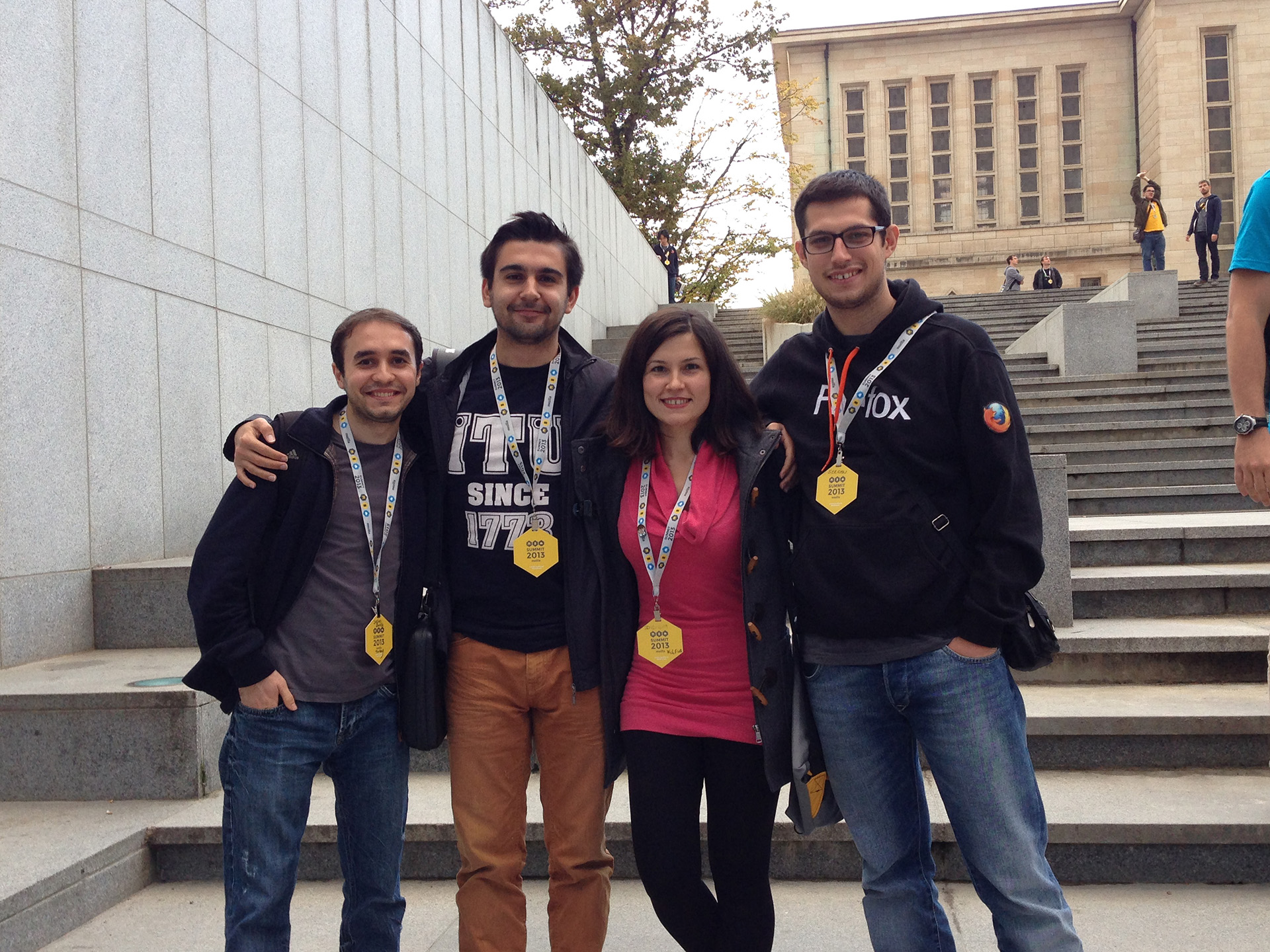
Selim (first left) with fellow Turkish Mozillians Onur, Didem and Serkan (Mozilla Summit Brussels)
Q: Over the years, do you remember how many projects you’ve been involved in (including ones that may no longer exist)?
A: It’s been so many! I began with Firefox 15 years ago, but I think I’ve been involved in around 30 projects over the years. We currently have 23 projects active in Pontoon, and I’ve been involved in every single one of them to some degree.
Q: Roughly how many Mozilla events have you joined — whether localization meetups, company-wide gatherings, MozFest, or others?
A: I’ve attended six of them. My first one was the Mozilla Balkans Meetup 2011 in Sofia. Then I had the chance to meet fellow Mozillians in Zagreb, Brussels, Berlin, Paris, and my hometown İstanbul. They were all great experiences, both enlightening and rewarding.
Q: Looking back, are there any contributions or milestones you feel especially proud of?
A: When I first began contributing, my intention was to complete a few missing translations I had noticed in Firefox. However, I quickly realized that the project was huge and there was much more to it than met the eye. Its Turkish localization was around 85% complete at that time, but the community lacked the resources to push it forward. I took it as my duty to reach 100% first, and then spellcheck and fix all existing translations. It took me a few months to get there, but Firefox has clearly had the best Turkish localization among all browsers ever since.
Your Background
Q: Does your professional background support or connect with your work in localization?
A: I currently work as a freelance editor and translator, translating and editing print magazines (mostly tech, popular science, and general knowledge titles), and localizing software and websites.
And the event that kickstarted my career in publishing and professional translation was volunteering for localization. (No, not Firefox. It didn’t even exist yet!) Back in high school, I began localizing an open-source CMS called PHP-Nuke to be used on my school’s website. PHP-Nuke became very popular in a short amount of time, and a computer magazine editor approached me to build the magazine’s website using open-source tools, including PHP-Nuke. I’ve been an avid reader of those magazines since my childhood but never imagined that one day I’d be working for Türkiye’s best-selling computer magazine!
In time, I began translating and writing articles for the magazine as a freelancer and joined the editorial staff after graduating from university.
I’ve written hundreds of software and website reviews and kept noticing that some of them were high-quality products that needed better localization. Now, with a better understanding of how things work and with some technical background, I began contributing to more and more open-source projects in my free time, and Firefox was one of them.
I was lucky that the previous Turkish contributors did a great job “localizing” Firefox, not just translating it. I learned a great deal from them, and it had a huge impact on my later professional work.
I was also approached and/or approved by several clients who had seen my volunteer localization work.
So, in a way, my professional background does support my work in localization — and vice versa.
Q: In what ways has being part of Mozilla’s localization community influenced you — whether in problem-solving, leadership, or collaborating across cultures?
A: Once I started contributing, I quickly realized that Mozilla had something none of the other projects I had contributed to previously had: a community that I felt part of. These people loved the internet, and they were having fun localizing stuff, just like me.
The localization community helped me improve myself both professionally and personally in a lot of ways: I learned how to collaborate better with a team of volunteers from different backgrounds, how to use different translation tools, how to properly report bugs, how to deal with different time zones, and how to get out of my comfort zone and talk to people from abroad both in virtual and face-to-face events.
Your Community
Q: As a long-time contributor, what motivates you to continue after all these years?
A: First and foremost, I believe in Mozilla’s mission wholeheartedly. But there’s a practical motivation too: Turkish is spoken by tens of millions of people, so the potential impact of localization is huge. Ensuring my fellow nationals have access to high-quality, localized open-source software is a driving force. And I’m still having fun doing it!
Q: Many communities struggle with onboarding or retaining contributors, especially after COVID limited in-person events. What are the challenges you face as a manager and how do you address them? And how do you engage with active contributors today? Do you have a process or approach for welcoming newcomers?
A: The Turkish community had its fair share of struggles with onboarding and retaining contributors, but it never became a huge challenge because of an advantage we had: The first iteration of the community started very early. Firefox 1.0 was already available in Turkish, and they maintained a good localization percentage for most Mozilla products, even if not 100%. So when I joined, there were things to do but not a single project that needed to be started from scratch. They were maintainable by one or two enthusiastic localizers. And when I took on the manager role, I always tried to keep it that way. I did approve a number of new projects, but not before ensuring that we had the resources to always keep them at least 90% complete.
But that creates a dilemma: New Turkish contributors usually face strings that are harder to grasp without context or are more difficult to translate, because the easier and more visible strings have already been translated. I guess that makes newcomers frustrated and they leave after translating a few strings. In fact, over the past 10 years, we’ve had only one contributor (Grk) who has translated more than 10,000 strings (apart from myself), and two contributors (Ali and Osman) with more than 1,000 strings. I’d like to thank them once again for their awesome contributions.
The Turkish community has always been very small: just a few people contributing at a time, and that has worked for us. So I’m not anxiously trying to onboard or retain contributors, but if I see an enthusiastic newcomer, I try to guide them by commenting on their translations or sending a welcome email to let them know how things work.
Something Fun
Q: Could you share a few fun or unexpected facts about yourself that people might not know?
A: Certainly:
- I’m a metalhead, and the first thing I ever translated as a hobby was the lyrics of a Sentenced song. I’ve been translating song lyrics ever since, and I have a blog where I publish them.
- My favorite documentary is Helvetica.
- I built my first website when I was 13, by manually typing HTML in Windows Notepad. That’s when I discovered the internet’s endless possibilities and fell in love with it.
No comments yet
Post a comment