Hello everyone! It’s Jamie. My internship at Mozilla is quite unfortunately coming to an end, after which I will be heading back to study at the University of Toronto. In this post, I want to share a rundown of my story working on the Localization (L10N) team, break down the projects I built, and reflect on what made this experience so special.
The First Day
Before joining Mozilla I was quite a bit nervous, as I had never worked at such a large organization before. The first day shattered this perception, as getting an office tour and having a live Q&A with VPs of Engineering really set the expectations of what working at Mozilla would be like.
The Toronto office became the go-to place for connecting with passionate, mission-oriented people across different teams. After getting my computer set up, I immediately got to work on Pontoon, Mozilla’s Translation Management System (TMS). Since Pontoon’s codebase relies on React and Django — frameworks I’ve worked with before — I was able to set up my local environment running smoothly and ship code early on. Over time, I had the opportunity to meet my fellow interns, each on their own teams, and we had chances to bond over our shared experiences and different problems.
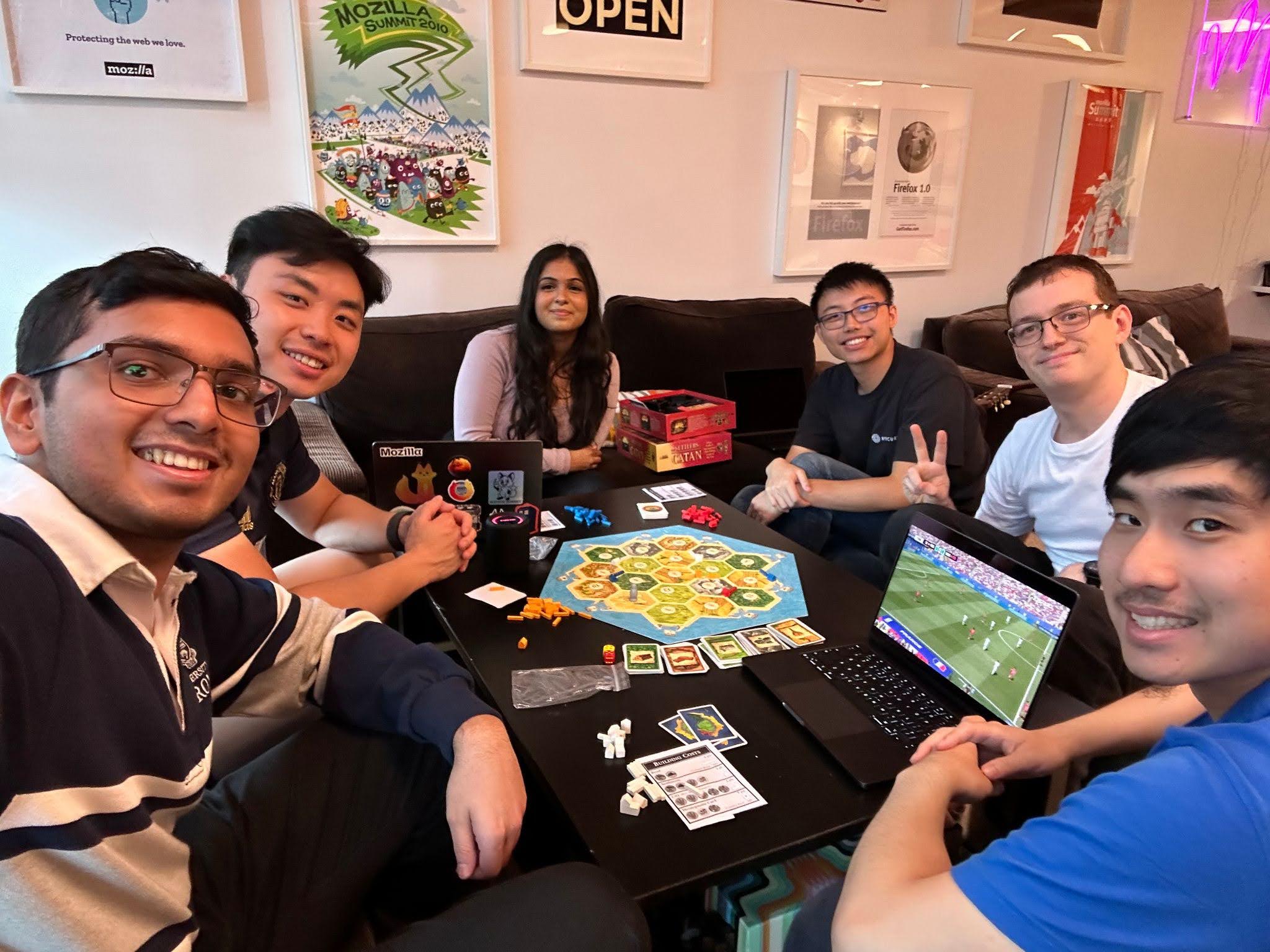
Spending my break time in the lounge with my fellow interns.
Since Mozilla is a remote-first company, the L10N team is distributed across Europe and North America. Working with them was an absolute highlight. To put it simply, they are a brilliant group of people of engineers, project managers and open-source contributors who keep Mozilla, and by extension, the wider web open and accessible.
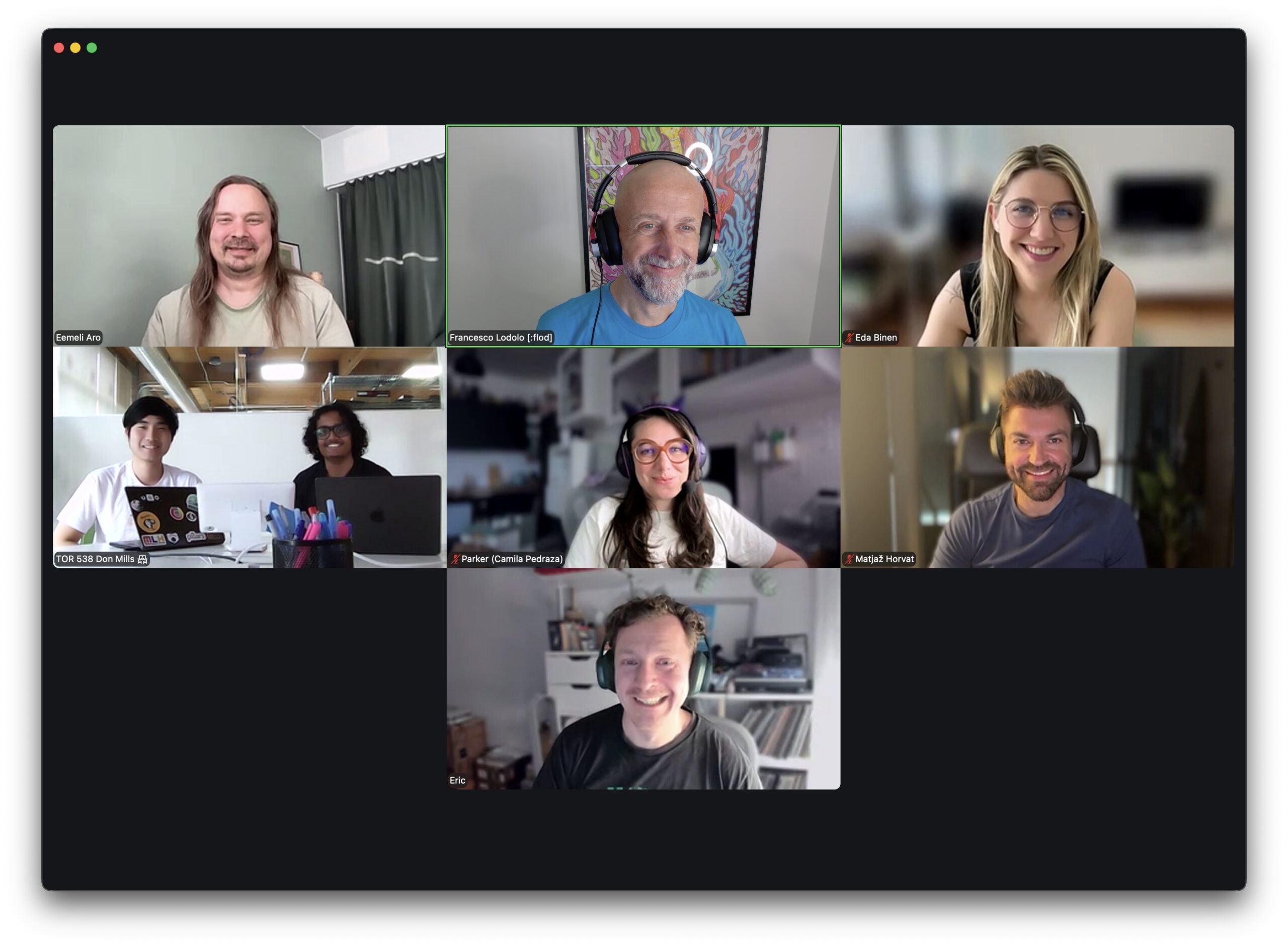
Group photo with the L10N team! Taken August 2026
So, what was working at Mozilla like?
Working at Mozilla, I had the opportunity to contribute to a variety of features involving Pontoon, associated localization workflows and other cool projects. During the duration of my internship, a great deal of localization related work was centralized and continues to be that way, which significantly influenced the projects that I worked on, and more generally, how the L10N team will continue to operate when I am gone.
This work unfolded against the backdrop of an ever changing technological landscape, particularly involving industry adoption of AI tools for code generation. In 2025 and 2026, agentic coding assistants like Claude Code and Cursor began to achieve mass adoption in software development. At Mozilla, I was introduced to Claude Code as a tool later in my internship, which was excellent, as it allowed me to gain a broad understanding of how the codebase worked without the use of AI. After the introduction of Claude Code to my workflow, I was able to push code and conduct code reviews on a much greater scale. I appreciate that Mozilla does not shy away from the practical uses of AI, especially in the realm of improving engineer and localizer workflows, and importantly, making it a choice.
The Work
Here is a shortlist of the varying projects I had the opportunity to work on at my time with the L10N team.
GraphQL Deprecation and REST API Implementation
The first task I was assigned to primarily revolved around the deprecation of Pontoon’s public-facing GraphQL API endpoints in favor of a Django REST Framework implementation. The motivations for this project included a preference for simplicity, desire for faster API response times and consistency with existing vanilla Django REST endpoints. The new public facing API lives here.
Personal Access Tokens
The next project I was given was to devise a new personal access token (PAT) implementation in Pontoon in order to gate permissions to the newly created REST API endpoints. I was inspired by the way that GitHub did their Classic personal access tokens so I tried to model my design around their implementation as much as possible.
Pontoon Translation Search
The next project I took up was to reduce the feature gap between Pontoon and Transvision. For context, Transvision was and is used for searching available translations of strings across certain Mozilla products. It uses GitHub as its primary source, which is why it is limited only to the big projects. Thus the motivation was to create a similar service directly on Pontoon that has the most up to date strings with all Mozilla products, with data manipulation and access being a non-issue due to existing on Pontoon directly. Translation Search lives here.

Pontoon’s Translation Search, which searches for strings across Mozilla’s localized projects.
Taking responsibility for Pontoon Add-on
The Pontoon Add-on was a community maintained browser extension that enabled localizers to keep track of their locale’s progress and receive any notifications from Pontoon directly in the browser. As part of the Pontoon API rework mentioned earlier, we needed to refactor the add-on code in order to maintain functionality. The main contributor had limited availability to continue maintaining the add-on anymore, so Mozilla assumed ownership of the extension, and we managed to clean up some of the backlog and redeploy.
Firefox for Android localization workflow changes
For years, Firefox Desktop and Firefox for Android used to operate under different localization workflows. Firefox for Android’s workflow was written such that Android developers needed to maintain deprecated strings to prevent previous versions of localizations of Firefox for Android breaking. Firefox Desktop does not have this issue due to different logic, so I rewrote the whole Firefox for Android workflow to be closer in substance to Firefox Desktop’s localization process. This subsequently deprecated the need for Android engineers to maintain the string deprecation process needed, which was great.
Insights Project Manager Dashboard and Alert system
The last main feature set I worked on was the Insights dashboard and accompanying alert system. For context, the Project Managers on the L10N team needed to calculate a score assigned to locales each month for community health analysis purposes using a mish mash of spreadsheets and Python scripts. This project automated the capture and calculation of these statistics to the first of each month and displayed them on a dashboard along with other useful information. The alert system was also implemented which notifies admins of significant changes of scores for specific locales, so certain locales can get increased focus.

Insights dashboard, which enables our Project Managers to track locale health over time.
Final Thoughts
Working at Mozilla has undoubtedly been an enriching experience. I have met a great number of incredible people who have guided me, encouraged me and shaped me into a better engineer and a better person. It has certainly widened my perspective on localization as a global effort, where peoples across different languages, cultures and creeds can work together to build a better web. I leave with sharper technical skills, amazing memories, and zero regrets, only immense gratitude for the opportunity to contribute to software that empowers millions. 🙂
Acknowledgements
To Matjaž (engineer and mentor): Your presence has been invaluable, both as a mentor and a friend. Thank you for your patience with my 10 PM deployment requests, endless questions, and edge-case bugs.
To Flod (manager): You are as always the backbone of the team, and have certainly taught me many lessons regarding leadership, professionalism and dependability. Thank you for reminding me about my deadlines and being the go-to for questions and feedback.
To Eemeli (engineer): Your Zoom call escapades have always been inspiring to me, from burning detritus, cooking random stuff, remote data lag spikes and such much more. I truly wish to become like you with such a vast and bottomless knowledge for so many facets of software engineering, before AI completely rots my brain.
To Ayush (fellow intern): I hope my mentorship was as helpful to you as your camaraderie was to me. You are going to accomplish great things, my friend.
To Eric (engineer): I very much enjoyed your unique German humor, your kindness and passion for building cool technologies.
To Camila (PM): Your personality is incredibly energetic, and I’m sure you will continue to bring so much positive energy to the team. I hope that you continue to be ambitious in everything that you do.
To Eda (PM): I really hope you enjoy working as part of the L10N team. I hope that you continue to make an excellent contribution to Mozilla!
Thank you for reading about my time at Mozilla! If you would like to learn more or wish to connect, feel free to contact me on LinkedIn.
Fin.
No comments yet
Post a comment